The Future of Florida’s Wilderness: Rewilding and Restoration Part 1/6

A Comprehensive Vision and Strategic Outline for Ecological Renewal 

Let’s get serious about the Florida environment. This first posting outlines the three major issues regarding the future of Florida, especially Southwest FL.

The title image is a view of Estero Park Preserve. I added the sign graphic.

  • Scenarios for the future
  • Risk/benefits of rewilding
  • Consequences of species intra- and interdependence

For centuries Florida has been famed for its vibrant and diverse wilderness. It is a living repository of species drawn from the Caribbean, the Gulf, and subtropical America. Yet the past two hundred years have seen this unique ecosystem ravaged. People introduced non-native species, relentlessly homesteaded, and transformed the landscape for agricultural and urban development. The result is a wilderness in crisis. It is fragmented, altered, and teeming with exotic species that out compete or hybridize with the native flora and fauna. This document series outlines a strategic plan for the future of Florida’s wilderness. It is an examination of possible scenarios. It presents the risk/benefit calculus of rewilding. It supports species interdependence. It has a step-by-step outline for ecosystem restoration.

Definition: Rewilding is comprehensive, often large-scale, conservation effort focused on restoring sustainable biodiversity and ecosystem health. (institute of Rewilding)

A landscape in Southwest Florida showing dense vegetation, including shrubs and dry grass, representing the ecological challenges faced in the region.
This is one example of tens of thousands of citrus groves abandoned and overrun by invasive species.

A landscape view of Florida's wilderness featuring tall grass and scattered trees, highlighting the need for ecological renewal.
Babcock ranch preserve undeveloped wet prairie
A lush, green forest scene in Southwest Florida featuring a variety of trees and underbrush, showcasing the region's rich biodiversity in its natural state.
Babcock ranch preserve undeveloped upland wood

Major Scenarios for the Future of Florida’s Wilderness

Florida stands at a crossroad, with three major possible scenarios for the trajectory of its wilderness:

  • 1. Continuance as a Species Repository: For millennia, Florida has served primarily as a bank of species. Rather than an origin point for evolutionary novelties it has been a major exporter of species elsewhere. Rewilding under this scenario would focus on maintaining and nurturing native species. It preserves the region’s role as a living archive of biodiversity.
  • 2. Generator of New Species: The widespread introduction of similar but non-native species—both intentionally has created a dynamic environment. Hybridization and adaptation of ornamental and agricultural plantings will unintentionally transform Florida into a generator of new species. Unpredictable and unintentional ecological outcomes will result.
  • 3. Degraded Ecosystem: If rewilding efforts fail or are mismanaged, Florida will become an ecological cautionary tale. With native species in decline invasive species will become rampant. Ecosystem services like water purification, habitat provision, and storm protection will severely decline.

Risk / Benefit Considerations in Rewilding

The imperative to restore Florida’s wilderness must be balanced by a careful analysis of risks and benefits. Rewilding, while promising, is not without peril.

  • Genetic Integrity: Simply replacing lost native species with physically similar, but non-identical genotypes can backfire. A non-native genotype may outcompete local species or fail to provide for dependent mutualists, causing cascading ecological harms. Cloning or propagating exact native genotypes minimizes this risk while preserving ecological relationships honed over millennia.
  • Ecological Compatibility: The introduction of new or “replacement” species may disrupt established mutualisms. They may also create new competitive dynamics while further destabilizing the ecosystem.
  • Proof of Concept: Any rewilding project must proceed through careful. It demands experimentation, trial phases, and rigorous review of existing literature. These will all be needed to maximize chances of success and minimize unintended consequences.

Intra- and Inter-Dependence of Species

Ecosystems are intricate webs with species depending on one another for food, shelter, pollination, seed dispersal, and countless other functions.

  • Physical and Genetic Identification: Restoration begins with precise identification of native species, both morphologically and genetically. This enables accurate matching of replacement stock and helps avoid mismatches that could undermine restoration.
  • Codependent Species: Many native species are mutually dependent. For example the relationship between native bees.; wildflowers or wading birds and wetlands. Successful rewilding requires restoration of these relationships, not just individual species.
  • Environmental Conditions: Beyond the species themselves, restoration must account for the specific environmental factors. Soil chemistry, water availability, fire regimes, and more allow these relationships to thrive.

These are the topics of the postings to follow

  • Review of State Key Initiatives
  • Structured outline for rewilding
  • Maximizing existing objectives
  • Marketing the concept for large scale rewilding of Florida
  • Call to action

SUMMARY

This is not just about legacy. This is your own quality of life; your own property value; your own cost of living. What are you thinking about when you don’t support initiatives, don’t press your representatives and spread invasive species? There are only three choices. 1. Fix it; 2. live with it as is; 3. abandon it and live with the consequences.

Let’s know your thoughts. Leave a reply jn the comment box below or start a thread in our discussion board.

If you wish to receive notifications of new postings enter your email and click on subscribe.

#rewilding #restoration #environment #risk/benefit #

Exploring More of Africa: A Photographer’s Dream Adventure

Everglades Ark is traveling again. This year the itinerary includes two weeks in Africa in the middle of our trip to Europe. Africa is a remarkable generator of spectacular species and a reservoir of diverse wildlife. This will be our second visit to the area below the horn of Africa. Kenya and Tanzania both offer excellent wildlife viewing. Three years ago we were in central Kenya to see its high concentration of wildlife, particularly in the Masai Mara. This time we will spend another 7 days in Kenya followed by 7 days in Tanzania. These regions are known for their vastness and remote wilderness areas.

The title picture was created from a photo made during the last trip to the Masai Mara. It is part of a community presentation made here in Bonita Springs FL.


In this area I expect to see a somewhat different variety of bird species and different behaviors. I am really looking forward to this safari and hope to bring back great stories and images. Our 2022 postings from the previous trip to Africa were extremely well received. The new posts of this experience should be ready in the fall. I will do my best to assure that they too are appreciated.

We will travel with National Geographic, G Adventures. Our group of 6 in the vehicle should make a reasonably comfortable seating arrangement. Our winter weather will be relatively cool and mild. Some of the location highlights will include the Great Migration, Ngorongoro crater and the Great Rift Valley.

The safari photo gear will be much the same except for the new Canon R5 body. This camera body will allow for more videography, better image stability, faster image recording and higher resolution. The array of memory cards will fill the demands of the two cameras. I will not use a blue tooth hard drive for image back-up. Every evening I plan to upload the images from the cards of the day directly to the iCloud . To facilitate this I will use the FTP on my iPad. For those interested in photography, here is a NatGeo link to aid in basic photographic experience when you photo/travel.

Map of Africa highlighting Kenya and Tanzania, illustrating the geographical locations important for wildlife viewing and safari itineraries.
The highlighted area in the Africa map shows the approximate travel area.

The itinerary includes:

  • Nairobi, Nakuru lake and park
  • Naiviasha Lake
  • Masai Mara plane
  • Olduvai Gorge and anthropology museum
  • Serengeti National Park
  • Ngorongoro national park

For those interested in wildlife photography and stories of Africa follow us for the posts in September!

If you wish to receive notices of future postings please fill in your email and click on subscribe

Cover Photo Published !

Marie Gorman, editor-in-chief and publisher of the Bay Watch News, accepted a submission for publication as a feature article written about Stunning Japanese Gardens for volume 7 number 5 April 2025. I previously posted much about this on this site and gave a Power Point Presentation to the Bonita Bay Community Association.

Much to my surprise she accepted two additional photos from my submission for the cover contest finalists. An even greater surprise for me was to see one of them on the cover of this recent issue. The feature image of this blog is a copy of that printed cover page.

Tommye Flemming, a senior contributing editor for the Bay Watch News also asked to interview me for a bio feature of residents in the community. We had a fun conversational experiencing. She was terribly flattering in her biographic sketch and also submitted additional photos from our travel experiences. This too was published in the same issue !

After the Bay Watch News was published, Marie said that she had an overwhelming positive response. I’m so pleased that these images and stories have brought a little happiness to so many people. See the full issue and enjoy the other submissions at this URL. Bay Watch News

Thanks Marie ! You made my day too.

If you wish to receive notification of future postings please enter your email and click on subscribe.

Feel free to use the coments block or go to the discussion board on this site.

#publication #Bay Watch News #biography # photography

Highlights from Our Spring Lecture Series

The spring series of three lectures was completed with good attendance. Thanks to all who attended and provided excellent feedback for future improvements. Discussions varied from thoughts of amazement in diversity of the ecosystems and colorful beauty of the plants and insects. For those who attended and those who expressed regrets, thanks for your consideration. For those unable to attend, see you next time! We had 23 attendees with sufficient room for 30. Watch for notification for next season in the Bonita Bay Community seasonal program bulletin.

On our blog site we will continue with our discussion of Japanese gardens compared to a Florida garden made in the Japanese traditional shinto style.

Watch for the feature article on Japanese Gardens in the Bay Watch News.

If you wish to engage in further discussions, please feel free to use the discussion board.

If you wish to make a comment, post it below

If you wish to be notified of future publications please enter your email and click on Subscribe.

Cultural Insights from Japan’s Stunning Garden Landscapes. Part I

INTRODUCTION:

This is the first of a series of postings on gardens in Japan. It is the result of a three-week, September visit in the central area of the island of Honshu, Japan. It focused in the area between Kyoto and Tokyo (Fig 1). This is called the Golden Route. These are my interpretations of observations of this on-site visit supplemented by a review of some of the relevant literature. The gardens are a small sample of complex art forms generated by the Japanese over the past 1000 years. It involves a combination of art, history, philosophy, politics, wealth, power struggles, and a dynamically adaptive way of life. Approximately 15 sites were visited in and around the cities of Osaka, Kyoto, Matsumoto, Nara and Tokyo. From my American and European experiences I found their visual impact emotively stunning. Much of the area seen reminded me of my home in Florida. It was so familiar but so foreign. This led me to ponder the contrasts and parallels of these eastern and western cultures. I was full of questions. I wanted to know what do the Japanese want us to think when we see their gardens ? What do the gardens tell us? What can we learn from the gardens?

There are many important factors that influence the gardens that include geology, geography, ecology, philosophy, and history. Surprisingly, there are similarities and parallels between Japan and America. Follow along with the Everglades Ark for a fascinating exploration.

Geology:

Japan is series of islands that act as a geologic barrier to the pressures of the Pacific Ocean. It is part of the “ring of fire” generated by four massive tectonic plates. Seventy five percent of the islands are mountainous that include volcanoes. It is subjected to the severest forces of nature including, earthquakes, typhoons, tsunamis, tropical storms, and lava eruptions. See Fig 1.

Fig 1. Honshu, Japan, geology and the area of travel
Fig 2. Japanese islands overlying US eastern seaboard

Geography:

The three larger islands of Japan lie, latitudinally, in a position similar to the eastern seaboard of the United States. If overlaped on the USA, they could cover an area extending from Main to Florida and from the Appalachian mountains to the Atlantic Ocean. The Pacific typhoons are like the Atlantic hurricanes on the coast of North America. They are generated by the warm air and water energy in the western Pacific Ocean. They follow the Kuroshio current that runs northerly along Japan’s eastern coast. This is equivalent to the African Easterly Jet and the Gulf Streams. The water and air streams move northerly along both east coasts east coast.

The weathering of the mountains of both areas have similar erosive effects. Tropical storms slam into the mountains causing erosion of the weathered rocks which is washed downward to the sea. Gravel, sand, and mud flow down their eastern slopes to cover the bedrock topography of the east coasts. This action creates broad deep coastal planes of fertile sedimentary soils ideal for plant growth to flourish. In Japan there is an additional source of nutrients to enrich soil. These are the volcanic effluents which additionally characterize the mineralogy of the land. See Fig 2.

Fig 3. Earth’s most densely populated city seen from the Tokyo tower looks the same in all directions.

Population:

The population of 122 million in Japan is nearly equal to the east coast of the US. The most populous portion of these islands lies in an area similar to the US Carolinas . The Tokyo central part of the city (Fig 3) has 15 million where the population density is 6,363/km2 (16,480/sq mi). The metropolitan area has 41 million where the density is 3,000/km2 (7,900/sq mi). The buildings are generally less than 60 years old because of the effects of American bombing in WW II. The construction materials are mostly steel reinforced concrete and glass; not wood. This image begs the question; Where are the gardens? This series of postings shows how I tried to attain understanding.

WHAT IS NEXT:

In postings still to follow, we will discuss interactions of all these factors and the probable anthropologic significance of Japanese gardens. Additionally, we will confront a question. Can some part of Japanese ethnographic field work be extracted from study of the iconography of Japanese gardens ?

SUMMARY:

The soil, water and weather are fundamental to the materials and design of Japanese gardens. The area visited was subtropical. During the three weeks of the trip, the midday temperature averaged 950 F and the humidity was nearly 90%. The daytime sky was mostly cloudless. In the month of travel, the island experienced two typhoons. It was just like home in Florida! But it wasn’t.

If you wish to express your ideas please use the comment area below.

If you want to enter into a dialogue please use the discussion board and follow the group participation.

If you wish to be notified of future postings please enter your email and click on Subscribe.

References:

•Japan, DK Eyewitness, Penguin House, Dorling Kindersley, 2000

•The Chrysanthemum and the Sword, Benedict R., Houghton Mifflin, 1946, 1957, 1967. 2005

•Judgement at Tokyo, Bass G.J., Alfred Knoff, 2023

•Zen Gardens, Masuno S., Tuttle Publishing, 2012

•Japanese Gardens Revealed and Explained, Chard R., Zenibo Marketing, 2013

•Japanese Stone Gardens, Mansfield S., Tuttle Publishing, 2009

#Japan #weather # typhoon #subtropical #Honshu #mountains #soil #volcano #soil #ethnography #
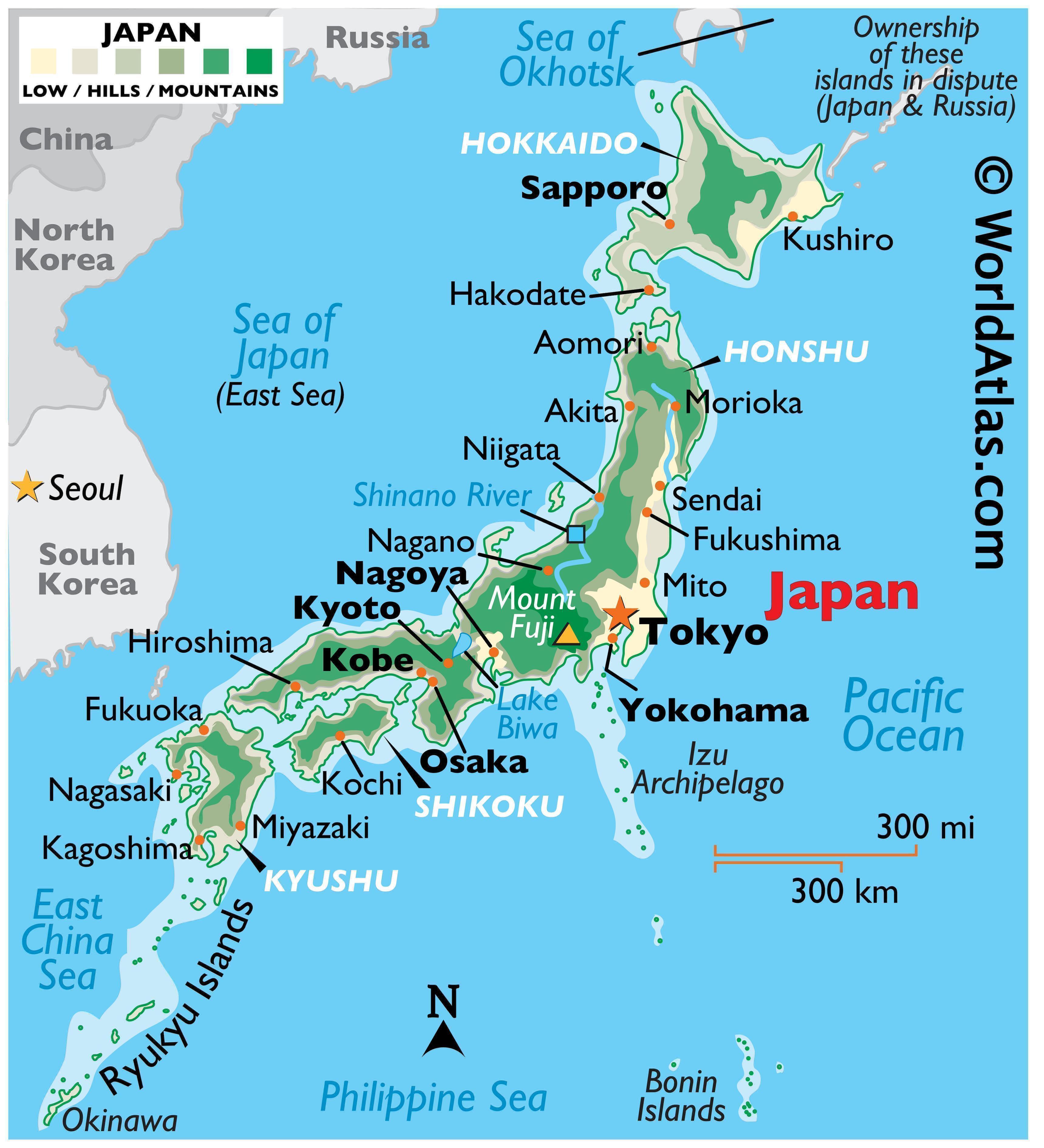
On the Way to Honshu

The Ark is on its way to Honshu, the main island of Japan. The travel route is eastward from Florida. There will be a stopover in Germany for a few weeks. The most distant stop will be for three weeks in Japan. The return trip will be the reverse flight back to Germany and finally to Florida.

There are many items on the to do list that include visits to cultural and historic sights but also to ancient gardens, the wilderness around Mt Fuji and other mountain trails along the way. Major cities will include Tokyo and Kyoto. Many important sites will be missed however that leaves room for growth.

Japan has many geological features and meteorological characteristics similar to Florida. It should be interesting to compare and contrast the the two distant sights.

Posts on this topic will begin in October.

Map of Japan from World Atlas

Bonita Bay Residential Community Pond: Hydrology, Geochemistry, and Microbiology Insights – Part 3

This small body of water is in the Bonita Bay residential community in the city of Bonita Springs, Florida. It has been discussed in the first two parts of this presentation. It was artificially constructed as part of a larger hydraulic system intended to manage the surface water of the four-square mile community property. This submission focuses on the details that are the foundation of the recovery.

The feature image shows an alligator taking a closer look at the pond.

The soil:

The base soil type is Anclote and Immokalee Sand and is consistent with the slough which divides the east and west portions of the property. The pond area was a mesic depression prior to development of the property. 

The water:

The pond is ground water sourced and linked to the surrounding ponds with underground conduits and to the slough by an above ground weir. This design maintains the water distribution level through a gravity driven cascading water flow. 5.5 million gallons of water is recirculated every day through a series of pumps and filters which supports the water level and provides grey water irrigation throughout the property. These pond hydrologic and geographic charts are from the Lee County Land and Water Survey.

Chart of water depth
Point of maximum depth.
Areas of submerged aquatic vegetation
Chart of bottom hardness

The chemistry:

The ponds are regularly sampled for chemistry and the specimens are sent to the State of Florida for analysis. Here are the results for pond #47 from our BBA Water Committee. The last chemical analysis report on this area was 1/23/2021. Note that the total phosphates and ortho phosphates are elevated above the acceptable standards. 

Statement of Pond chemical analysis supplied by Bonita Bay Community Association:

Hydrology, Geology and Biology graphic summary

The microbiology:

A sample of surface pond water in a small area of surface growth these microscopic specemines were found.

Spyrogyra ?
Desmosdesmus maximus & Mesotaenium
Gastrotrichs
Euglenia ? 
Nauplius larva of a cyclops copepod 
Diatom

These microbiological organisms are normal. The most important finding was the absence of unwanted forms such as cane toad eggs, mosquito larvae, or invasive aquatic plants.

Statement of Pond Condition:

When surveyed on 04/10/2021, the water level was at 0.3 m (NAVD’88) for a water volume of 13,670 m3, a planar surface area of 7,130 m2 and a perimeter of 420 m. The mean depth of the pond was 1.9 m for a maximum depth of about 3.5 m in the central portion of this triangular pond. On 06/19/2021, the water was slightly brackish and hard with an adequate pH. The water column was thermally well mixed and the dissolved oxygen was about 6.9 ppm (adequate level) until about 1 m where a steady drop of dissolved oxygen occurred until it reached anoxia near the bottom (i.e., no dissolved oxygen). The sediment accumulation in this pond was moderately thick with 33% organic content. Based on the nutrients analyses, the pond was nutrients rich (eutrophic). The copper concentration was not determined in this pond. Although there are no standards for sucralose concentrations in the water, based on the range of sucralose concentration found at the BBCA ponds studied, pond 47 was found to have moderate levels of sucralose concentration which ties its nutrient loading to the use of reclaimed water. The pond was surrounded by lawns with some rooted vegetation near the edge of the water. Banks were also quite steep. There were some aquatic plants around the periphery of the pond with a higher density in the northeastern littoral zone which likely limited the nutrient loading into this pond.

Recommended Land management plan:

1. Sediment mapping: map the sediment including thickness and nutrient analysis by depth. 2. Dredging: Not currently necessary but depends on sediment map results. 3. Flocculation: Treat to mitigate nutrients in the water column and in the sediment.  4. Circulation: Not currently needed. 5. Aeration: Not currently needed. 6. Planting: Shoreline shows minor erosion. Verify plant recovery in 2025. 7. Shoreline restoration: Not currently needed 8. Restrict lawn fertilization of neighboring grass and ornamental trees. 9. Advocate reduction in lawn size and support native plant gardening.

The pond was significantly refurbished in 2020. The water level was reduced to 25% of filled. The soil was supplemented and recontoured to eliminate a steep drop at the water line that was the result of erosion. All house roof runoff was diverted by mandated gutters and downspouts. The downspouts were directed underground into the pond. The shores were remediated with contouring, installation of a soil retaining mesh and generous planting of aquatic vegetation at the new shoreline. The pond was allowed to refill naturally. Hurricane Ian, which occurred in September 2022, was a very destabilizing climatic event which significantly altered most of the ponds in Bonita Bay Community. Ten feet of sea water inundated lake #47. The height has returned to normal and the chemistry is slowly recovering. The selected soil stabilizing plant life surrounding the pond was thought to be lost but after two years is now slowly regrowing. The next  State reported sampling will be done in 2025. 

Summary:

The pond appears to be recovering well from the hurricane event two years ago. The foundation has been well preserved. I expect that the physiology of the ecosystem will stabilize at the levels near those reported in 2021. Sediment mapping is overdue considering the levels of nitrogen and phosphorus. There may be some improvement in the shoreline vegetative growth. It is remarkable that this totally artificial body of water provides so much to help to support all this diverse wildlife. The related sixty community ponds have responded equally well to similar care. This is an excellent example of cooperative natural growth and human intervention to produce a beautiful eutrophic environment.

If you wish to be notified of new posts enter your email and click on Subscribe.

If you wish to contribute to this subject please use the comment box.

Please feel free to participate in the discussion board. You may engage in a current discussion or start a new topic.

#eutrophic #ecosystem physiology #microbiotics #hydrology #geology #nutrients #nutrient rich #phosphates

Pine Flatwood / Scrubby Flatwood – Part 2

The purpose of this post is to show the details of the scrubby understructure of the flatwood pine of the Estero Bay State Preserve in Estero Florida. Additionally one can see the management of of the ecosystem with prescribed burning. in the first post about this site post we saw the general terrain of the pine flatwood of the State Preserve. Now we can compare this understructure to a previously explored Florida’s hard wood hummock.

The feature image is the Florida State flower. The Tickseed (Coreopsis Leavenworthii)

Scrubby flatwoods are characterized by an open canopy of widely spaced pine trees and a low, shrubby understory dominated by scrub oaks and saw palmetto, often interspersed
with areas of barren white sand.*

This image shows the size of the saw palmetto (Serenoa repens) scrubby flat.
Hog plumb (Ximrnia americana)
Florida wax myrtle (Morella cerifera)

Off the trails, it was very difficult to make any headway. I was insufficiently prepared for the hazards. Because of the dangerous anatomy of the saw palmetto growth, it was nearly impossible to walk. The stems of these palmettos were edged with saw like teeth. Without brush pants, shirt, gloves and boots it was impossible to venture by foot deep into the off-path areas without injury. There may be interesting animals living in this dense razor-sharp growth, however, that will wait for another day. In the future we will investigate these plants and this territory in more detail. I also walked into some of the previously prescribed burn areas. 

Possible cogon grass. Seeds not visible. If it is this grass, it is invasive.
Bushy bluestem grass (Andropogon glomeratus)
Flag pawpaw (Asimina obovata)
Hog plumb (Ximrnia americana)
Florida wax myrtle (Morella cerifera)

There were also recently burned areas already showing extensive recovery. In these areas it is easy to see the root structure of the saw palmetto. They are like palm trees lying horizontally just below the surface of the soil. The fronds sprout horizontally from the roots. Without the herbaceous portion of the plants, it was much easier to walk off the path and see the regenerative behavior of the plants.

Roots and pinecones densely littered the surface and were robustly sprouting new growth. I could see no erosion of the soil caused by the surge in the areas with the saw palmetto roots. The burned areas were very interesting. It was evident that the green tops of the saw palmetto burn easily, probably because of their high oil content. The saw palmetto plants burn even when they are green. The surviving palm and pine trees were scorched and trunk surface burned but in the pines not down to the cambium and not into the tree crowns. Prescribed burning is an important part of the control measures for this area and deserve more attention. 

Laurel dodder (Cassytha filliformis) Probably invasive vine.
Tickseed (Coreopsis Leavenworthii)
The rich deep brown chromyl spectra of the charred forest ranging from deep chocolates to subtle cafe-au-lait plus the broad textural variety in this setting retains the promise of plant regeneration.

Prescribed burning:

Prescribed burn area showing the exposed sand surface with very low mineral and organic soil content
This view of the postburn area shows the root system holding the soil from erosion
Remnant of the saw palmetto growing from the remaining root
The surface of the slash pine scorched  but not burned through to the cambium

The areas with prescribed burning seen a year ago also experienced a heavy flood surge  from hurricane Ian. These areas have recovered. There are scorched trees and some deadwood, however, most of the scrub has regrown. It is difficult to distinguish the destruction of the trees from fire or from flood. There were also recently  burned areas already showing extensive recovery. In these areas it is easy to see the root structure of the saw palmetto. They are like the trunks of palm trees lying horizontally just below the surface of the soil. The fronds sprout vertically from the roots. Without the herbaceous portion of the plants, it was much easier to walk off the path to see the regenerative behavior of the plants. Roots and pinecones densely littered the surface and were robustly sprouting new growth. I could see no erosion of the soil caused by the surge in the areas with the saw palmetto roots. The burned areas were very interesting. It was evident that the green tops of the saw palmetto burn easily, probably because of their high oil content. The saw palmetto plants burn even when they are green. The surviving palm and pine trees were scorched and surface burned but not down to the cambium on the pines and not into the tree crowns. Prescribed burning is an important part of the control measures for this area and deserve more attention. 

Rabbit bells (Crotalaria rotundifolia)
Costal plane stagger bush (Lyonia fruticose)

Discussion:

The scrubby flatwood and the flatwood pines or the Estero Bay Preserve are very different from the C.R.E.W. Cyprus Dome walking trails. The concept off highlands in Florida are evident in the CREW when you consider the major differences in flora between the two Preserves. Subtle changes in land height make a remarkable difference in vegetation. One could almost exchange the term ‘Highland’ for “Dryland’. In fact, “High Land” designation could practically be made on the basis of vegetation rather than measurement. That relative dryness provided by a few centimeters on height changes the entire biology of the environment. The height advantaged trees are also phototrophic. They grow toward the light and therefore at their climax are broad leafed and wide spread. The plants of the flats are are geotrophic,. They grow high and narrow. They are not competing for the light once they rise above the scrub. This height advantage allows them to bring the crown of needles out of fire harm’s way. When comparing the role of fire in the two environments, fire in the hardwood climax forest is calamitous while fire in the flats are regenerative. I suspect that the nutrative value of soil in the planes areas will also make an important differences in plant selection.

Tougher clothing is an imperative for exploring the saw palmetto scrub. 

If you enjoyed this click on like.

If you wish to engage in dialogue use the comments link.

Iff you wish to be notifies of new posts enter your email and click on subscribe.

References::

*Scrubby flatwood

Saw Palmetto Control: Individual Plant and Broadcast Application

A Study of the Physical and Chemical Properties of Saw Palmetto Berry Extract

Typical yields in harvestable areas range from a low of 200 lbs. to more than 1000 lbs. of berries per acre.https://patents.google.com/patent/US6669968B2/en

Saw Palmetto Market     https://www.futuremarketinsights.com/reports/saw-palmetto-market

Saw Palmetto Berries    https://fenuccio-j.medium.com/saw-palmetto-berries-996329cbec20

Forest Herbicide Workshop   https://programs.ifas.ufl.edu/media/programsifasufledu/florida-land-steward/events-calendar/Minogue-2021-Forest-Herbicide-Webinar-Pine-Mgmt-FINAL.pdf

Harvesting Saw Palmetto  https://sustainableherbsprogram.org/explore/plants-in-commerce/saw-palmetto/harvesting-saw-palmetto/

Sustainability of Saw Palmetto   https://www.herbalgram.org/resources/herbalgram/issues/132/table-of-contents/hg132-feat-sawpalmetto/

Saw Palmetto Structure  https://nwdistrict.ifas.ufl.edu/hort/2021/03/04/saw-palmetto/

#flatwood #saw palmetto #prescribed burn #

Citizen Scientists Build the Everglades Ark

SCIENCE FOR YOU

As a citizen scientist you can help to build our Ark with plant and animal images and information. When you look and learn about your surroundings you can share your experience with your contribution.

Everglades Ark collects information of animal and plant observations from Southwest Florida and from other global areas for comparison using Epicollect5 freeware. The purpose of this data collection is for survey and inventory. In addition to the images our Ark relational database includes related time, date, location, identity, behavior, interactions and environmental conditions as well as cohabitation influences of species and circadian and seasonal influences. It is often supplemented by high resolution photos, audio recordings and microscopic images. This assembled data may be used by anyone to facilitate environmental management, education and understanding of environment impact. The accessable database is freely available for anyone to use. If you wish to participate as a citizen scientist in collection or analysis please contact john@evergladesark.com and link to Evergladesark.com

Observation, Data collection and Epicollet5:

All observations are made using the custom app, in the field, in an as-is unaltered state. Observations are made with minimal invasion of the area or disruption of the animals. Often the garden staff and volunteers are very helpful and facilitate cooperation.  Some additional lighting is used on occasion to facilitate photography for educational purposes. Some samples of the plants and animals are collected, and further examined macron microscopically. These staged photographs allows for more detailed examinations.

The customized Epicollect5 – Everglades Arm freeware is downloaded from their website at Epicollect5/Everglades Ark . It is well explained and intuitive to use. After entry, the data may be downloaded from the data website in a comma delimited file to MS Excel. The downloaded files may be sorted for individual research without effecting the master file. In order to add information to the site, participants need to be approved and their instruments validated by Everglades Ark staff. Only the administer may edit the entries. Imbeded in the entry format the are instructions. 

The data from the site is arranged into two sections. These are:

  • Survey collection is the data entry through the internet from cell phone observations in the field.
  • Recorded  collection is the data entry of details of off-location high resolution records. These include the non cell phone records from the cameras, microscope  and audio and video equipment and their associated sub file data such as lens type, lens settings etc. The Recorded section files are entered through hard wire or intranet connection after all of the cell phone field entries are uploaded to the Epicollect5 site via an internet connection. 

Identification of species phylum, class, order and common name is done as best as possible using two or more identification resources. Experts are always welcome to recommend corrections or suggestions.

The observation number is the File Key. This sequential number entered into the data entry point is used to reference all other data such as those of the off-location files. The off-location files are located on dedicated hard drives and backed up to a secure cloud account.

Interested parties are encouraged to participate as volunteer citizen scientists at the Everglades Wonder Gardens. A training experience is required to participare as an surveyor and collector.

Look for the next posting titled Epicollect5/Everglades ark v.2 posting coming soon.

Contact john@evergladesark.com for more information.

References:

http://evergladesark.com/2021/04/03/about-gps-distances/

If you wish to receive notification of new posting please enter your email and click on subscribe.

# database #Epicollect5 #data #records #collection #survey #images #citizen scientist

Florida Marsh Exploration. Part II

A marsh is a wetland with herbaceous vegetation that does not have trees. There are freshwater and saltwater marshes and the distinguishing characteristics are plants and animals which inhabit the areas. For example, typically birds feed but do not nest in saltwater marshes. The plants in saltwater marshes are capable of tolerating episodes of salinity. The opposite is typical of freshwater marshes and swamps. Please see Florida Marsh Exploration. Part I

The featured image is an overview of the marsh as seem from the observation deck.

Trees generally do not survive in wetlands such as marshes because they are constantly wet, however, swamps generally do have trees because there are seasonal dry periods. The plants typically found in marshes are obligate water plants that depend on a long hydroperiod.

The following photographs illustrate the plants and animals which I saw during the three episodes into a saltwater marsh described in the previous publication. This marsh in the slough of Bonita Bay Community is attempting to recover from hurricane Ian in 2022. There was damage which is still unresolved. This can only be done by replacing the salt water with fresh water. This is complicated because of the greater density of the salt water which sinks to the bottom of the pond and does not freely mix with freshwater. Despite some plant’s salt tolerance they have been overburdened by more salt than they can tolerate. Mangroves thrive in these environments.

Swamp fern (Blechnum sewrrulatum)
Extensive masses of dead plants with new growth. Note the green duckweed on the water surface.
Herbaceous growth in water covered by duckweed
Duck potato (Sagittaria lancifolia)
Great White Heron (Ardea herodias occidentalis)
Saw Grass (actually a sedge) (see photomicrograph)
Extensive areas of dead grasses, reeds and sedges.
Cat-tail (Typha latifolia) Plants are all dehydrated despite growing in water. The cause is salt water.
Saw Grass (Cladium jamaicense) making a comeback in low salinity areas.
Saltmarsh Fleabane (Pluchea)                                               
Water Hessop (Bacopa monniere)
Southern wax myrtle (Myrica cerifera)
Burhead sedge (Oxycaryum cubense)
Black mangrove (Avicinnia germians)
Pond apple (Annona glabra) This was also found in the Corkwood Swamp which is freshwater.
Duck weed.(Lemna minor)(With empty snail shell) 
Duck weed showing extracted lump tangle of rootlets extending five inches from below water surface.

The very dense overgrowth of duckweed that you can see in the photographs of the surface of the ponds blocks the sunlight from the below surface water and depletes the oxygen of the pond. The oxygen depletion kills fish and without sunlight below the surface new plants can’t thrive. On the beneficial side the plants could be used for bioremediation of waterways by capturing and removing excessive amounts of phosphorus and nitrogen. 

Duckweed magnified to show no vascular system and complex root anatomy on ventral surface
Sawgrass leaf magnified to show saw tooth

During and after the flood caused by hurricane Ian in 2022 the plants have been inundated for months by salt water. The salt water is drawn up into all reaches of the plant by capillary action through their vascular systems. At the cellular level, osmotic action of the semipermeable cell wall draws the non salty water out of the cell. The salt water does not enter the cell because the water is withdrawn from the cell and it becomes dehydrated and dies.

Coming later we will explore the difference between the fresh water marshes of Florida and of the Okavango delta in Botswana.

If you like this please click on like.

Please add your comments to engage in a discussion.

If you wish to receive notifications of new postings please enter your email and click on subscribe.

#saltwater marsh #marsh #wetland #saw grass #heron #morning glory #fern #dehydration #duckweed #pond apple #Great White Heron #hydroperiod #obligate

Earth’s Axial Tilt Determines Forest Winners

The ancient giants are here and they rule their worlds. They are big and conquer their territory with power. They use so much that they choke out almost anything else. They make offspring that spread to make more giants. They become hundreds or even thousands of years old and can survive almost any natural calamities. They are of course, old growth trees. 

When visiting old growth forests most people look up to see and admire the majestic canopy that shades the floor. The umbrella could be either gymnosperm (pine) or angiosperm (leaf) or some mixture of these trees. Today’s post is a comparison of two climax forests that have developed in marshy wetland areas. The Corkscrew Swamp is in SW Florida (SWFL) and Maybury State Park is in SE Michigan (SEMI). I have resided in and explored both types of forested wetlands and we can see the similarities and differences in juxtaposition. 

At first look, some things were evident. The Michigan canopy is a result of the leafy foliage of angiosperm trees. There were pine trees in this forest but because of plant succession, the forest now is heavily populated with hard wood trees of hickory, four types of oak, iron wood, two types of maple, beech, birch  and a scattering of others. Among the 1000 acres of parkland there were only a handful of pine trees which were obviously intentionally planted as ornaments for the holiday season. 

The Floridian Corkscrew Preserve canopy is the result of needle foliage of gymnosperm trees of two types of Cyprus, slash pines mixed with some hardwood trees Red Maples, Live Oaks and Cabbage Palms and a few Royal Palms.

Another remarkable difference was the water flow. Corkscrew Preserve is 18 feet above MSL Maybury Park is 300 feet above MGLL. This is of minimal significance. Michigan is experiencing a drought. In this park area with the three creeks, some ponds and two lakes all are nearly devoid of water. What were swamps are now meadows. The soil was cool and dry. There has been little or no water inflow from creeks, springs, and no rain in two months. Weather forecast for Michigan shown no predictable relief from the drought conditions. The Florida swamp is seasonally relatively dry but it was still moist or boggy with a slow sheet water flow of the Everglades. The rainy season is just beginning. 

Maybery Park understory with very little light and a leafy canopy
Corkscrew understory with substantial understory growth and a canopy of soft Cyprus needles
What was a pond with fish in Maybery Park is now a swamp with white tail deer.
Pond in Corkscrew with alligator
Cat tails in the dried lake bed of Maybury Park. No ferns were found.
Two of several varieties off ferns at Corkscrew park.
Understory of Maybury Park. Very low minimal plant growth mostly nettles, poison ivy, balsam and wood sanicle
Understory of Corkscrew Preserve. Highly varigated height and diverse varieties. Many Ferns.

I searched for several plant and animal species. The ferns in the Corkscrew were abundant. There were no ferns in the Maybury Park. This was a real surprise because they were present 5 years ago. They are probably still present in the deep swamp in areas. Flowering plants in the Corkscrew Preserve were abundant and colorful and deserve another posting. The featured image is a wild hibiscus from Corkscrew Preserve, Florida. Flowers in the Maybury Park were herbaceous, minimal, and small. The most common were fleabane, thistle, and dandelion.

These two old growth forested areas are remarkably different. The differences arise from geographic position in latitude which alters the range of temperatures, the length of the day’s sun exposure, the period of below freezing temperatures. Corkscrew is a mature cyprus forest in the tropics at the 18th parallel while Maybury is mature hardwood forest at the 44th parallel. It is only 22 degrees south of the artic polar circle. Longitudinally they nearly identical. The rotation of the earth on its axis results in two very different climates. Because of the axis of rotation of the Earth, SEMI can experience wide ranges of temperature varying in a high to low range of 125o F with months of sub-freezing temperatures. The range of high to low temperatures in SWFL is closer to 50o F with no freezing temperatures. These climatic changes result in vastly different biologizes. The summer temperatures are nearly identical with hot sultry weather. For two weeks around the 4th of July, the daily high temperature in SEMI can be higher than Florida with over 100O F . 

The solar rotation of the earth and the 23.5 degree off axis tilt of the rotation of the earth results in these two very different climates. Michigan daylight hours at the summer solstice are two hours longer than Florida and at the winter solstice two hours shorter than Florida. At the 44th parallel summer solstice days are 6 hours longer than the winter days six months later. The prolific mid-summer biologic activity of the Michigan forests must compensate for the 5 months of cold weather where there is very limited or no metabolic activity. The broad leaves of the angiosperm tree leaves must manufacture all the products of growth, reproduction, and metabolism. The Floridian forest metabolism simply continues all year long. 

Fig 1. Location of the two sites, Maybury and Corkscrew, on the summer solstice graphic. See how close Maybury is to the line of the Midnight sun. It is halfway to the North Pole. Only 22 degrees from the Arctic circle. Corkscrew Preserve is 18 degrees from the Equator. The dotted blue line is the axis of rotation.

The giant trees are the winners because they grow taller than all others, collect more energy by photosynthesis from the sun, store energy when the light is not available and produce more seeds for reproduction. There are alternatives to big tree success. These are the dwellers in the dark. A more extensive discussion regarding fern spore production in Corkscrew Preserve will follow. 

The Floridian ecosystem has the potential for more diverse life forms. It favors plants and animals that prefer a more stability in weather and climate. Michigan ecosystems favor a tougher collection of plants and animals which can be prolific in summer climate and store reserves for surviving deep winter climate.  It is very understandable to see the survival value in animal migration. Many of the animals follow the cyclical greening of America from Michigan to Florida in the winter and the reverse in the summer.

Click on the FB icon to add it to your page

If you like its click on like

f you wish to be notified of new postings please enter your email and click on subscribe

#solstice #tilt of earth #wetland #Corkscrew #Maybury #photosynthesis #trees #angiosperm #gymnosperm #water #light

Coastal Wetlands Part I, Microscopy Imaging Intro

Microscopic examination of the soil samples from the beaches of the Southwest Florida coastal wetlands is foundational to the understanding of this part of the State. The use of microscopy aids in determining particle size, surface roughness, percentage of constituents, homogeneity of particle size and reaction to chemicals. Much of this is silica sand called quartz. This naturally occurring glass is an enormous part of our civilization. Sand is used for construction of concrete structures like streets and highways, buildings, and infrastructure such as dams, oil fracking and park benches. It is also the basis of our communications and computer systems from silicone chips, monitor screens and fiberoptic cables. It is the window through which we look and the lens we use to see the far reaches of our universe.

The featured image is an excellent example of a grain of high quality quartz sand. It is shown as seen under microscopic examination illuminated by transmitted polarized light. It is a sample of the standard to which other samples are compared.

This is an introduction to the assessment of samples that appear through microscopic examination of these natural building blocks. The samples shown here were collected from the surface of the beaches along a few miles north of Naples, Florida’s west facing coast. They were collected and recorded in the database found at Beaches of Southwest Florida

This posting is intended to assist you in interpreting the reported results of observations made.

This square meter of costal hinterland is packed with information. It is site #87 in the Costal Database. The following micrografs were made with just a pinch of the surface soil.

Through the microscope, several light sources were used that include incident flash white light, transmitted white light, transmitted polarized white light, occasional combinations of these sources, transmitted ultra blue light for fluorescence and selected color filtered light. These images will be identified by observation number as shown in the database.

#87, Fig 1. Sample showing clear quartz and transparent quartz particles with white transmitted light
#87, Fig 2. Sample showing colorful quartz and transparent quartz particles using polarized transmitted light
#87, Fig 3. Sand sample 5x polarized transmitted and flash light. Note the rounded corners of the quartz sand grains when compared to the wharf edges of the cover picture.
#87, Fig 4. same sample but added vinegar. Spherical bubbles are easily identified forming during the test process. See video below.
#87, Fig 5. This movie clip shows the off gassing of carbon dioxide from a fragment of mollusk shell as it goes into solution. Note the developmental striations in the shell sample.

These findings are reported in the database as a ‘1’ in the response choice.

Other characteristics are also recorded as shown in the following chart extracted from the database site. Where homogeneity ranges from poor to very well, size ranges from coarse to very fine, shape ranges from sharp to well rounded, source is by mineral composition, quartz ratio is in percentage by count of particles in the field of view X3, particle size can be measured down to .035 mm. Further sizing of smaller dimension is by micrometer.

Chart sample of finding characteristics of observation #87

The quartz portion of the sand is the common building block of most beaches. Under polarized light it behaves like a prism and is polychromatic. This feature is readily identifiable as a distinguishing feature. The non quartz particles may be of other ingredients such as stone, fossil, coral, plastic resin, or other salts. When vinegar is added to the sample a chemical reaction transpires where calcium carbonate reacts with the weak acid and goes into solution releasing the carbon dioxide as a gas in bubble form. This is seen in the video micrograph. The non quartz shell findings can also be distinguished by the repetitive pattern of growth and development lines in the fragments.

I hope that you find this useful when you check out our new database link Beaches of SWFL

#photomicrograph #quartz #sand #videomicrograph #polarized light #database #beaches #Southwest Florida #SWFL #transmitted light #reflected direct light #costal ecosystems

The microscope used is referenced on an earlier posting

COSTAL SYSTEMS OF SW FLORIDA

In addition to current topics in our posts we begin of a new arm of Everglades Ark. The Coastal Systems are a large portion of Florida. By State Florida has second longest of the ocean coastlines in the USA. It is remarkably diverse with the full gamut of wildlife of the animal, plant and protist Kingdoms. Observations range from macroscopic to microscopic, geologic to biologic and is as variable as the weather.

To satisfy the understanding of this system I have developed a new online, interactive, database supported by Epicollect5. The information may be found in cd files, still images, video clips and audio files. There are four portions in this database that include: beach geology findings, mollusk findings, bird findings and microscopic soil findings.This is publicly available for your use to download the comma delimited files for use in programs like Excel and Google maps. The address for this data site is https://five.epicollect.net/myprojects/beaches-of-southwest-florida.

This is a sister of the other site that is part of Everglades Ark found at https://five.epicollect.net/project/everglades-ark

These are important supplements to this site. They provide us with evidence used to support our monologues, dialogues and discussions. These are also part of our effort to support citizen scientists most of whom can enjoy the discoveries found in nature,form the basis for statistical analysis of findings and provide evidence to support theories. Sorting of these finds have beed previously discussed in earlier postings.

I highly encourage you to participate in this form of discovery. The observations are the most valuable part of the data .the greater number of observations results in a more reliable foundationv If you wish, please feel free use the data in your own projects and share the results with us. If you want to join our group by recording your findings please contact me at: john@evergladesark.com.

I will provide instruction and with your email address, allow permission to be a collector for the Coastal areas of SWFL

The data map below shows the interrogatories and responses of the database. They are in this downloadable PDF file. Your comments and recommendations are welcome,

Thank you for your continued interest in Everglades Arl. If you wish to be notified of future postings please enter your email and click on subscribe.

#Epicollect5, #mapping, #Everglades Ark, #database, #Google maps, #Excel

All Posts – Links

I have introduced a new page in the menu line of the header to act as a tool requested by several of our fellow travelers. This new page lists all of the pages and directs the viewer to the page site. Click on the tittle or image. This function a supplement to the query magnifying glass symbol. The query allows the participant to enter words that are linked to key terms in the site text’s. The magnifying glass is on the right side of the header.

The feature image shows the title block of the header.

I hope that buy expediting a review of the site.you find this convenient.

Try it out here. Click on All Posts – Links . In the usual fashion, you can return here by clicking in the back arrow in the banner at the top of this page.

If you have further suggestions please feel free to comment in the form below.

African Birds, Aequorlitornithes

Here are portraits of birds of Africa from the clade Aequorlitornithes. The Aequorlitornithes include all shorebirds, waterbirds, flamingos, grebes, gulls, tropicbirds, penguins, including pelicans, ibis, and heron.

The cover picture is a Yellow Billed Stork (Mycteria ibis). It is feeding along the shore with the hippo lying inches away. The hippo provides a sense of scale. Additionally it shows that the animals of differing species cooperate unless they are direct predators.

Be sure to look at our post of portraits of the Inopinaves in a previous blog, African Birds, Inopinaves.

—-+—-

EGRET & HERON

Great White Egret (Area aigrette). This appears to be identical to the Great White Egrets of the Florida Everglades. Its ancestors along with those of the Western Cattle Egrets were probably blown over to Florida by some ancient hurricane.
African Grey Heron (Ardea cinerea), Chobe National Park, Chobe River, Okavango Delta. Botswana
African Jadcana (Actophilornis Africans) AKA: Lilly trotter

—-+—-

STORKS

Marabou Stork (Leptopilos cruminifer) Chobe Botswana
Yellow billed stork (Mycteria ibis)
Marabou Stork (Leptopilos cruminifer). These shadowy figures are backlighted by the sunset as they settle down for the night.
Chobe National Park, Chobe River, Botswana

—-+—-

DUCK

Spur Winged Goose (Plectropterus gembensis). Largest duck in Africa. Chobe National Park, Chobe River, Okavango Delta, Botswana.
Egyptian Goose (Alopochen egyptiaca). Actually a duck; there are no true geese in Africa. They are usually found in pairs. Not a well focused photo, however, with a hand held camera from a distance of ~ 450 meters it will get the task done. Why did the duck cross the Mara river?

—-+—-

OTHER FOWL

Rhynchops
Afican Skimmer (Rhynchops flavirosteris) Chobe National Park, Chobe River, Okavango Delta. Botswana
Pied Kingfisher (Cercle rudis), Chobe National Park, Chobe River, Okavango Delta. Botswana. I captured this image of the Kingfisher as he was hovering, perfectly still, 10 meters above the river surface waiting for the right moment to strike. He fell like an arrow and he had his fish lunch.

There were many other birds which I observed but did not photograph because of poor conditions. These include Western Cattle Egret, Quella and Red billed African Oxpickers. Several varieties will be mentioned when showing the birds cleaning or riding on the ungulates.

I highly recommend participation in the Cornel Lab of Ornithology found at eBird. It a great resource for identification and information. To understand the naming of birds used in this blog site check out the previous discussion on bird identification in the Everglades Ark posting. When you go to the Okavango in Botswana, Africa, there I recommend a very useful field guide. It may be purchased online or at the Chobe National Park Lodge.

“THE CHOBE COMPANION”, Hancock P, Randall R, Sandor Books Ltd, Maun Botswana, 2014. ISBN 978-99968-0-247-8

#Africa #birds #ducks #geese #kingfisher #storks #ibis #stork #Jadcana #Okavango #Maasai Mara #Botswana #Kenya

If you wish to receive notification for new postings please enter your email and click on subscribe. If you wish to participate in discussion or make comments please leave a reply.

5 responses to “African Birds, Aequorlitornithes”

  1. Beauty Fashion Avatar

    Great post. I was checking continuously this blog and I am impressed! Extremely helpful information specifically the last part 🙂 I care for such information a lot. I was looking for this certain info for a long time. Thank you and good luck.

    1. John Knapp Avatar

      Thanks!

  2. Hairstyles Avatar

    you are really a good webmaster. The web site loading speed is amazing. It seems that you are doing any unique trick. Also, The contents are masterwork. you have done a fantastic job on this topic!

    1. John Knapp Avatar

      That is really encouraging. I continue to work on my web skills.

  3. Hairstyles Avatar

    excellent post, very informative. I wonder why the other specialists of this sector do not notice this. You must continue your writing. I’m sure, you’ve a great readers’ base already!

Powered by WordPress.com.

Up ↑